
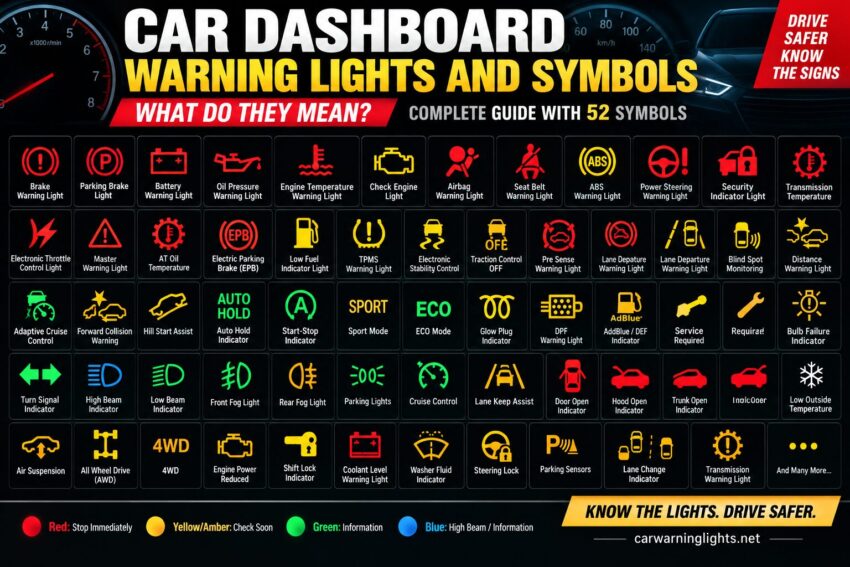
Dashboard warning lights and symbols are designed to tell you when your vehicle needs attention, when a system is operating normally, or when a fault may have been detected. A warning light can relate to the engine, oil pressure, brakes, battery, tires, transmission, airbags, stability control, emissions system, or advanced driver-assistance features.
Understanding the meaning of dashboard warning lights can help you decide whether you can continue driving, need to check something immediately, or should stop the vehicle and seek professional assistance. In this guide, you can find common car dashboard symbols, their meanings, what different warning-light colors mean, and what you should do when a dashboard light comes on.
Important: Dashboard symbols are not completely universal. The shape, color, flashing behavior, and exact meaning can vary by manufacturer, model, and model year. Always use your vehicle owner’s manual as the final reference for a warning light on your specific car.
What Do Dashboard Warning Lights Mean?
Dashboard warning lights are visual messages from your vehicle. Some are simple indicators that confirm a function is operating, while others alert you to a condition that may require inspection or immediate action.
For example, a green turn-signal indicator normally tells you that the direction indicator is active. A blue high-beam indicator confirms that the high beams are switched on. In contrast, a red oil-pressure or engine-temperature warning can indicate a potentially serious problem that should not be ignored.
The most important details to look at are the symbol, color, whether the light is steady or flashing, and any message displayed on the instrument cluster.
Dashboard Warning Light Colors: Red, Yellow, Green and Blue
The color of a dashboard symbol provides an important clue about its purpose and urgency. However, color conventions can differ between manufacturers, so the owner’s manual remains the best source for your particular vehicle.
🔴 Red Dashboard Warning Lights
Red warning lights usually indicate a high-priority condition that may require immediate attention. Examples include engine temperature, oil pressure, brake-system, battery/charging, and some airbag or steering warnings.
If a red warning light appears, safely assess the situation and read any accompanying message. For warnings involving overheating, oil pressure, braking, steering, smoke, or a major change in vehicle behavior, stopping the vehicle may be necessary.
🟡 Yellow or Amber Dashboard Warning Lights
Yellow or amber lights generally indicate that a system needs attention, inspection, or service. Examples include the Check Engine Light, ABS, tire-pressure monitoring, DPF, emissions, and many driver-assistance warnings.
A yellow light does not automatically mean that the vehicle must stop immediately. However, it should not be ignored, especially if it is flashing, accompanied by another warning, or associated with unusual vehicle behavior.
🟢 Green Dashboard Indicator Lights
Green dashboard lights usually indicate that a vehicle function is active or operating. Common examples include turn signals, low-beam headlights, fog lights, cruise control, and some driving-mode indicators.
Green indicators are normally informational rather than signs of a mechanical fault.
🔵 Blue Dashboard Indicator Lights
Blue dashboard lights are commonly used to indicate that a lighting or vehicle function is active. The most familiar example is the high-beam indicator.
A blue indicator is generally informational, but the exact meaning still depends on the vehicle.
Can I Drive With a Dashboard Warning Light On?
Whether you can continue driving depends on the specific warning light, its color, whether it is flashing, and how the vehicle is behaving.
Can I Drive With a Red Warning Light?
Do not assume that a red warning light is safe to ignore. Red warnings involving engine temperature, oil pressure, brakes, steering, or another critical system can require you to stop as soon as it is safe.
If the vehicle is overheating, losing braking ability, becoming difficult to steer, producing smoke, or making unusual mechanical noises, stop driving and seek professional assistance.
Can I Drive With a Yellow or Amber Warning Light?
Some yellow or amber warnings allow you to continue driving cautiously, but the vehicle should generally be checked as soon as practical. A Check Engine Light, ABS warning, TPMS warning, DPF warning, or driver-assistance fault can have very different consequences depending on the vehicle.
Can I Drive With a Green or Blue Light?
Green and blue symbols are usually indicators rather than fault warnings. They commonly confirm that a lighting or driving function is active. Check the owner’s manual if you are unsure about a particular symbol.
What Does a Flashing Dashboard Warning Light Mean?
A flashing warning light can be more urgent than a steady light. The exact meaning depends on the system and vehicle.
For example, a flashing Check Engine Light can indicate a serious engine misfire that may damage the catalytic converter or other components. A flashing glow-plug or emissions-related warning on a diesel vehicle can also indicate a fault that needs diagnosis.
If a warning light starts flashing and the vehicle is running roughly, losing power, overheating, braking differently, or behaving abnormally, reduce risk by stopping safely and seeking professional assistance.
Dashboard Warning Lights vs. Indicator Lights
Not every dashboard symbol means that something is broken. A useful distinction is between warning lights and indicator lights.
Warning lights alert you to a possible fault, unsafe condition, or maintenance issue. Indicator lights normally confirm that a feature is active, such as the turn signals, headlights, cruise control, or a selected driving mode.
Some symbols can serve more than one purpose depending on whether they are steady, flashing, or accompanied by a message. This is why the exact vehicle and model year matter.
Most Important Dashboard Warning Lights to Know
Some warning lights deserve particular attention because they can indicate conditions that may cause expensive damage or create a safety risk. These include:
- Engine Temperature Warning Light — possible overheating.
- Oil Pressure Warning Light — possible low engine oil pressure.
- Brake System Warning Light — possible brake-system problem or applied parking brake.
- Battery Charge Warning Light — possible charging-system fault.
- Check Engine Light — engine, emissions, fuel, ignition, or control-system fault.
- ABS Warning Light — possible anti-lock braking system fault.
- Airbag / SRS Warning Light — possible restraint-system fault.
- Tire Pressure Warning Light — low tire pressure or TPMS problem.
- Transmission Temperature Warning Light — possible transmission overheating.
- DPF Warning Light — diesel particulate filter may require regeneration or service.
Dashboard Symbols by Vehicle System
Dashboard lights can also be grouped according to the vehicle system they relate to:
Engine and Powertrain Warning Lights
These include the Check Engine Light, engine temperature, oil pressure, electronic throttle control, glow plug, and engine-management warnings.
Brake and Safety Warning Lights
These include brake-system, parking-brake, ABS, brake-pad, airbag, seat-belt, and brake-assistance warnings.
Tire and Stability Warning Lights
These include TPMS, traction control, electronic stability control, AWD, 4WD, and related drivetrain indicators.
Transmission Warning Lights
These include transmission temperature, automatic gearbox, transmission service, and other gearbox-related warnings.
Diesel and Emissions Warning Lights
Diesel vehicles can display DPF, glow-plug, fuel-filter, water-in-fuel, AdBlue/DEF, and emissions-system warnings.
Driver Assistance Warning Lights
Modern vehicles can display warnings for adaptive cruise control, lane departure, lane keeping, blind-spot monitoring, collision mitigation, parking sensors, and radar or camera obstruction.
Lighting and Information Indicators
Turn signals, headlights, fog lights, high beams, cruise control, driving modes, and general information indicators are commonly used to show that a feature is active.
What Should I Do When a Dashboard Warning Light Comes On?
- Look at the color. Red warnings generally deserve more immediate attention than yellow or amber warnings.
- Check whether the light is steady or flashing. Flashing warnings can indicate a more urgent condition.
- Read the instrument-cluster message. Many modern vehicles provide additional information that explains the warning.
- Pay attention to how the vehicle feels. Overheating, loss of braking or steering, reduced power, smoke, unusual noises, or a strong burning smell can change the urgency.
- Check the owner’s manual. The exact symbol and required action can vary by manufacturer and model year.
- Get the vehicle diagnosed when necessary. A diagnostic scan can identify stored fault codes that cannot be determined from the symbol alone.
Common Dashboard Warning Lights and Symbols
Below is our reference list of common dashboard warning lights and symbols. Click the detailed guide where available to learn more about a specific symbol.
1. Engine Temperature Warning Light
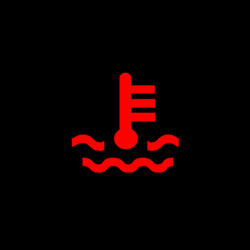
Engine Temperature Warning Light: Indicates that the engine coolant temperature is too high and the engine may be overheating. This is one of the most important dashboard warning lights and requires immediate attention.
What should you do? Stop the vehicle as soon as it is safe to do so and allow the engine to cool. Do not open the radiator or coolant reservoir while the engine is hot. If the warning remains or returns, have the vehicle inspected.
Click for detailed information: What Does the Engine Temperature Warning Light Mean?
2. Oil Pressure Warning Light
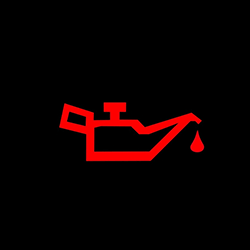
Oil Pressure Warning Light: Indicates a possible problem with engine oil pressure. Low oil pressure can prevent proper lubrication of critical engine components and may cause serious engine damage.
What should you do? Stop the engine as soon as it is safe to do so. After the engine has cooled, check the oil level according to the owner’s manual. Do not continue driving if the warning remains illuminated.
Click for detailed information: Engine Oil Pressure Warning Light Meaning
3. Battery Charge Warning Light
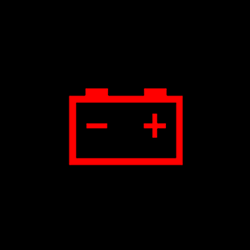
Battery Charge Warning Light: Indicates a possible problem with the vehicle’s charging system. The alternator, battery, wiring, or another charging-system component may be involved.
What should you do? Turn off unnecessary electrical accessories and have the charging system checked as soon as possible. If the vehicle begins losing electrical power, stop safely and seek assistance.
Click for detailed information: What Does The Car Battery Warning Light On The Dashboard Mean?
4. Hand Brake Warning Light
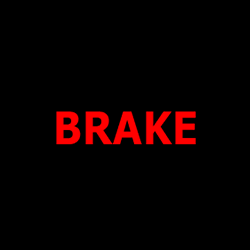
Hand Brake Warning Light: Usually indicates that the parking brake or hand brake is applied.
What should you do? Make sure the parking brake is completely released before driving. If the light remains on, the brake system may need inspection.
5. Hand Brake Warning Light (Other)
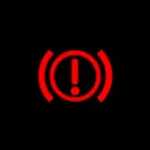
Hand Brake Warning Light (Other): Usually indicates that the parking brake or hand brake is applied. Similar symbols can have additional meanings depending on the vehicle.
What should you do? Release the parking brake fully. If the warning remains illuminated, check the owner’s manual and have the braking system inspected if necessary.
6. Electric Parking Brake Warning Light
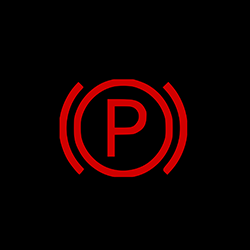
Electric Parking Brake Warning Light: Indicates the status of the electric parking brake system. Depending on the vehicle, the symbol can appear when the parking brake is applied or when a related function is active.
What should you do? Check whether the electric parking brake is applied and follow the vehicle’s instructions for releasing it. If a fault message remains, have the system checked.
7. Airbag Malfunction Warning Light

Airbag Malfunction Warning Light: Indicates that the vehicle has detected a possible fault in the airbag or Supplemental Restraint System (SRS).
What should you do? Have the airbag/SRS system diagnosed as soon as possible. The vehicle may drive normally, but the restraint system may not operate as designed in a collision.
8. Seat Belt Not On Warning Light
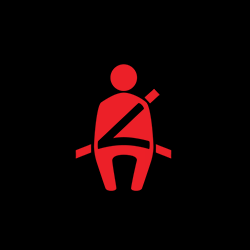
Seat Belt Not On Warning Light: Indicates that a seat belt is not fastened. On some vehicles, the warning can also be activated by an occupied passenger seat.
What should you do? Fasten the seat belt before driving and make sure passengers are properly restrained. If the warning remains after fastening the belt, consult the owner’s manual.
9. Transmission Temperature Warning Light
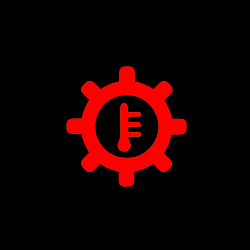
Transmission Temperature Warning Light: Indicates that the transmission may be operating at an excessively high temperature.
What should you do? Reduce load and stop safely if the warning remains on. Follow the manufacturer’s instructions for checking transmission fluid and cooling conditions, and have the vehicle inspected if the warning returns.
10. Car Security Warning Light

Car Security Warning Light: Indicates the status of the vehicle security or anti-theft system. The exact behavior of the indicator varies by vehicle.
What should you do? Check the owner’s manual for the normal flashing pattern. If the vehicle will not start or the indicator behaves abnormally, the key or immobilizer system may require diagnosis.
11. Electronic Throttle Control Warning Light
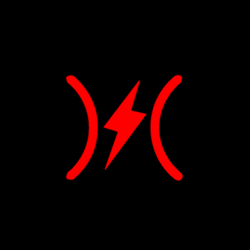
Electronic Throttle Control Warning Light: Indicates a possible malfunction in the electronic throttle control system.
What should you do? If the warning is accompanied by reduced power, abnormal throttle response, or rough running, stop driving when safe and have the vehicle diagnosed as soon as possible.
12. Car Ahead Indicator Warning Light
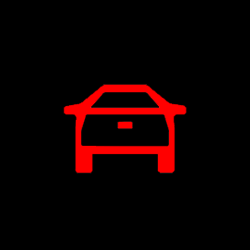
Car Ahead Indicator Warning Light: Indicates that a vehicle or obstacle ahead has been detected by a driver-assistance system. Depending on the vehicle, it may warn the driver to reduce speed or prepare to brake.
What should you do? Remain fully attentive and maintain a safe following distance. Do not rely solely on the driver-assistance system to avoid a collision.
13. Lane Keep Assist Warning Light
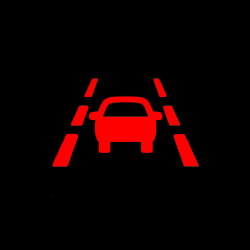
Lane Keep Assist Warning Light: Relates to the lane-keeping assistance system, which can provide steering assistance when the vehicle approaches or crosses a lane marking.
What should you do? Keep your hands on the steering wheel and remain responsible for steering. If the system reports a fault or becomes unavailable, follow the vehicle’s instructions.
14. Check Engine Light or Malfunction Indicator Light (MIL)
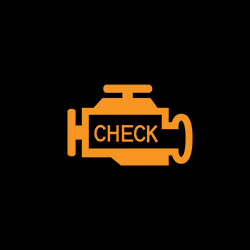
Check Engine Light or Malfunction Indicator Light (MIL): The Check Engine Light, also called the Malfunction Indicator Lamp (MIL), indicates that the vehicle has detected a problem involving the engine, emissions, fuel, ignition, or related control systems. A steady light generally requires diagnosis, while a flashing light can indicate a more serious fault.
What should you do? Have the vehicle scanned for diagnostic trouble codes. If the light is flashing, the engine is running very roughly, or power is reduced, avoid continued driving and seek professional assistance.
Click for detailed information: Check Engine Light: What Does It Mean and How to Reset?
15. Check Engine Light or Malfunction Indicator Light (MIL) – Other
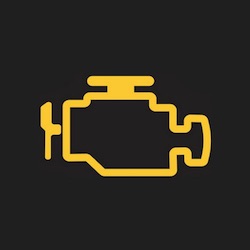
Check Engine Light or Malfunction Indicator Light (MIL) – Other: The Check Engine Light or Malfunction Indicator Lamp (MIL) indicates that the engine or emissions-control system has detected a fault. The same general warning can appear in different instrument-cluster designs.
What should you do? Read any accompanying message and have the vehicle scanned for diagnostic trouble codes. A flashing engine warning should be treated as more urgent than a steady light.
Click for detailed information: Check Engine Light: What Does It Mean and How to Reset?
16. Diesel Particulate Filter (DPF) Warning Light
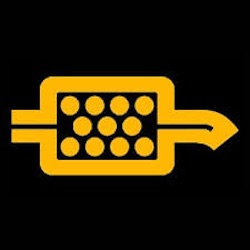
Diesel Particulate Filter (DPF) Warning Light: Indicates that the diesel particulate filter has accumulated soot and may need regeneration or service. A heavily restricted DPF can reduce engine performance and increase emissions.
What should you do? Follow the manufacturer’s regeneration instructions. If the light remains on, flashes, or appears with additional warnings or reduced power, have the DPF and engine-management system inspected.
Click for detailed information: Diesel Particulate Filter Warning Light Meaning
17. Glow Plug Warning Light

Glow Plug Warning Light: Used mainly on diesel vehicles. The glow plug system helps preheat the engine for starting, especially in cold conditions. A warning that remains on or flashes after starting can indicate a fault.
What should you do? Follow the vehicle’s starting instructions. If the light remains on or flashes after the engine starts, have the glow plug and diesel engine-management system checked.
Click for detailed information: Glow Plug Warning Light: What Does Glow Plug Light Mean?
18. Low Fuel Indicator Symbol
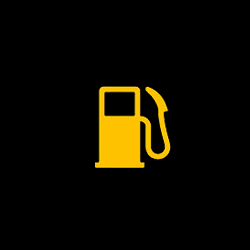
Low Fuel Indicator Symbol: Indicates that the fuel level is low. The amount of fuel remaining when the warning appears varies by vehicle.
What should you do? Refuel as soon as practical. Check the owner’s manual for information about the vehicle’s reserve fuel level and estimated remaining range.
19. ABS Warning Light
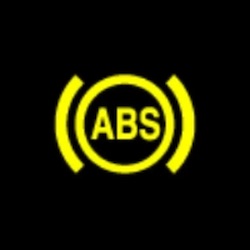
ABS Warning Light: Indicates a possible fault in the Anti-lock Braking System (ABS). The vehicle may still have conventional braking, but ABS and related functions may be unavailable.
What should you do? Drive cautiously and avoid hard braking when possible. Have the ABS system scanned and inspected, especially if the ABS light appears together with a red brake warning.
Click for detailed information: ABS Warning Light Meaning
20. SPORT Mode

SPORT Mode: Indicates that Sport mode is activated. Depending on the vehicle, this mode can change throttle response, transmission behavior, steering, suspension, or other driving characteristics.
What should you do? No repair is normally required when the symbol simply confirms that Sport mode is selected. Use the mode according to the road and driving conditions.
21. Service 4WD Warning Light
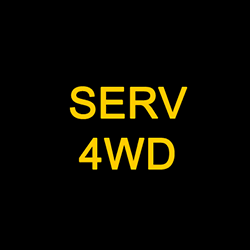
Service 4WD Warning Light: Indicates a possible malfunction in the four-wheel-drive system when the 4WD or service warning remains illuminated.
What should you do? Check the vehicle’s display for an accompanying message and have the 4WD system diagnosed if the warning persists or drivetrain behavior changes.
22. Electronic Stability Control Active Warning Light
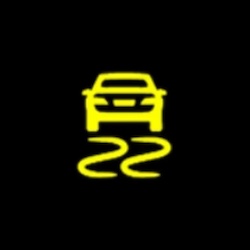
Electronic Stability Control Active Warning Light: Indicates that traction control or electronic stability control is actively intervening, often when the vehicle detects wheel slip or reduced traction.
What should you do? If the light flashes briefly on a slippery surface, the system may simply be working. If it stays illuminated, check whether the system was switched off and have it inspected if necessary.
23. Car Triangle with Exclamation Point

Car Triangle with Exclamation Point: A triangle with an exclamation point is a general or master warning symbol. The exact meaning depends on the accompanying message and vehicle manufacturer. Different colors can indicate different levels of urgency.
What should you do? Read the message shown on the instrument cluster or information display. Do not assume that the triangle alone identifies the underlying problem.
Click for detailed information: Triangle with Exclamation Point Meaning
24. Door Open Warning Light
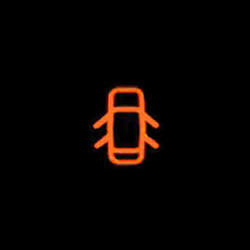
Door Open Warning Light: Indicates that one or more doors may not be fully closed. Some vehicles identify the specific open door on the information display.
What should you do? Stop safely and check all doors before continuing. Do not drive with a door that cannot be securely latched.
25. Swing Gate Reminder Warning Light
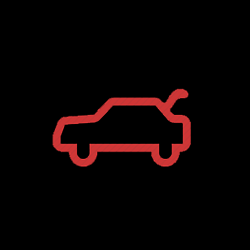
Swing Gate Reminder Warning Light: Indicates that the luggage compartment, tailgate, or swing gate may be open.
What should you do? Close and securely latch the luggage compartment or tailgate before driving. If the warning remains, the latch or sensor may require inspection.
26. Hood Open Warning Light
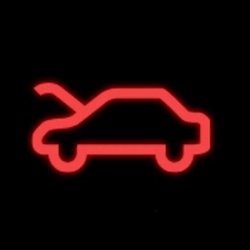
Hood Open Warning Light: Indicates that the engine hood or bonnet may not be fully closed.
What should you do? Stop safely and make sure the hood is properly closed and latched. Do not continue driving if it cannot be securely fastened.
27. Service Electric Parking Warning Light
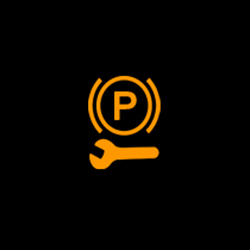
Service Electric Parking Warning Light: Indicates a technical problem or fault in the electric parking brake system.
What should you do? Follow the vehicle’s instructions and have the electric parking brake system inspected promptly. If braking performance is affected, stop driving and seek assistance.
28. All Wheel Drive Warning Light
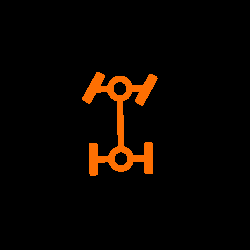
All Wheel Drive Warning Light: Indicates a possible problem with the all-wheel-drive (AWD) system.
What should you do? Check for an accompanying message and avoid demanding driving until the AWD system has been inspected if the warning indicates a fault.
29. Steering Wheel Warning Light
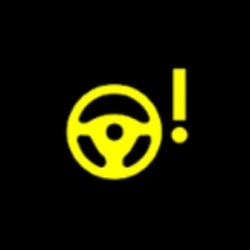
Steering Wheel Warning Light: Indicates a possible problem with the vehicle’s steering-assistance system. Depending on the vehicle, the system may use electric or hydraulic assistance.
What should you do? If steering becomes unusually heavy or difficult, stop in a safe location. Have the steering system inspected before continuing normal driving.
30. Water in Fuel Filter Warning Light
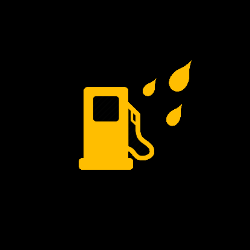
Water in Fuel Filter Warning Light: Used mainly on diesel vehicles to indicate that water may have accumulated in the fuel filter or water separator.
What should you do? Follow the manufacturer’s procedure for draining the water separator or servicing the filter. Do not ignore repeated warnings because water can damage diesel fuel-system components.
31. Loose Fuel Filler Cap Warning Light

Loose Fuel Filler Cap Warning Light: Indicates that the fuel filler cap may not be sealed correctly. A loose cap can trigger an emissions-related warning.
What should you do? Stop when safe and make sure the fuel cap is tightened correctly. If the warning remains after several normal drive cycles, the fuel or emissions system may need inspection.
32. Low Washer Fluid Warning Light

Low Washer Fluid Warning Light: Indicates that the windshield washer-fluid level is low or the reservoir is empty.
What should you do? Refill the washer-fluid reservoir with a suitable fluid. If the warning remains after refilling, the level sensor or washer system may need inspection.
33. Service Adaptive Cruise Control Warning Light
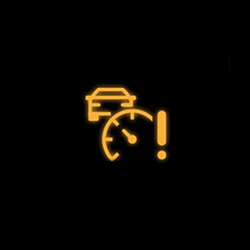
Service Adaptive Cruise Control Warning Light: Indicates that Adaptive Cruise Control (ACC) is unavailable or has detected a fault. Blocked radar or other sensors can sometimes cause the system to become unavailable.
What should you do? When safe, stop if the vehicle instructs you to do so and restart the vehicle if appropriate. Check the radar/sensor area for dirt, ice, snow, or other obstructions. If the warning remains, have the system diagnosed.
34. Traction Off Light
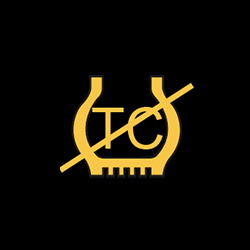
Traction Off Light: Indicates that the traction-control system has been switched off or is unavailable. The exact behavior varies by vehicle.
What should you do? If you did not intentionally switch traction control off, check the vehicle controls and owner’s manual. Drive with extra caution on wet, icy, or snowy roads and have the system diagnosed if the warning cannot be cleared.
35. Electronic Stability Control Off Warning Light
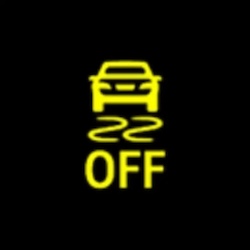
Electronic Stability Control Off Warning Light: Indicates that electronic stability control or a related traction system has been switched off or is unavailable. A continuously illuminated warning can also indicate a malfunction.
What should you do? Check whether the system was intentionally disabled. If the warning remains unexpectedly, have the stability-control system diagnosed.
36. Tire Pressure Monitoring System (TPMS) Warning Light
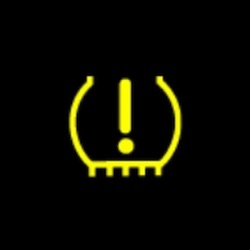
Tire Pressure Monitoring System (TPMS) Warning Light: Indicates that one or more tires may have low pressure or that the tire-pressure monitoring system has detected a fault.
What should you do? Check all tire pressures with an accurate gauge and inflate them to the manufacturer’s recommended pressure. If the warning flashes or returns, have the TPMS inspected.
Click for detailed information: Tire Pressure Monitoring System Warning Light Meaning
37. Lane Departure Warning Light
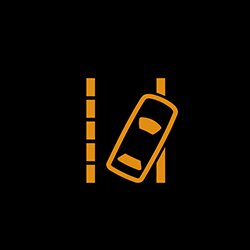
Lane Departure Warning Light: Relates to a system that detects lane markings and can warn the driver when the vehicle moves toward or across a lane boundary.
What should you do? Remain attentive and keep control of the vehicle at all times. If the system reports a fault, check the camera area and follow the manufacturer’s instructions.
38. Smart Entry System Indicator Light

Smart Entry System Indicator Light: Indicates a possible malfunction in the smart entry and start system or a problem with the ignition key or keyless-entry system.
What should you do? Check the key-fob battery and follow the emergency starting procedure in the owner’s manual if necessary. Have the smart-entry system diagnosed if the warning persists.
39. Lane Departure Warning Light (Other)

Lane Departure Warning Light (Other): Relates to a lane-departure warning system that can alert the driver when the vehicle leaves its lane without the expected turn signal input.
What should you do? Keep your attention on the road and use the system as driver assistance only. If the warning indicates a fault, have the camera and lane-assistance system checked.
40. Suspension Control Warning Light
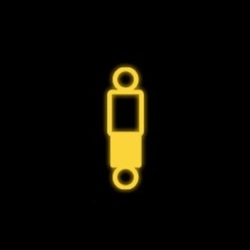
Suspension Control Warning Light: Indicates that the vehicle has detected a possible fault in the suspension-control system.
What should you do? Drive cautiously, especially if the vehicle feels unusually hard, low, high, or unstable. Have the suspension system diagnosed as soon as practical.
41. Automatic Gearbox Warning Light
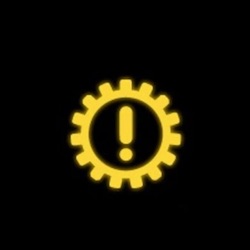
Automatic Gearbox Warning Light: Indicates a possible problem with the automatic transmission or its electronic control system. The warning may appear in different colors depending on the vehicle.
What should you do? Avoid hard acceleration and drive cautiously if the vehicle can still select gears normally. If shifting becomes abnormal or the vehicle enters limp mode, seek professional diagnosis promptly.
42. Collision Mitigating Braking System Warning Light
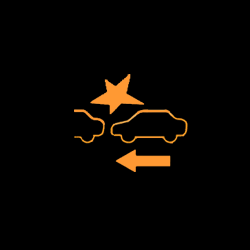
Collision Mitigating Braking System Warning Light: Indicates that a collision-mitigation braking system may be switched off, unavailable, blocked by a sensor obstruction, or affected by a malfunction.
What should you do? Check the radar/camera sensor area for dirt or obstruction if the manufacturer permits. Do not rely on automatic collision braking while the system is unavailable, and have persistent warnings diagnosed.
43. Blind Spot Indicator Light
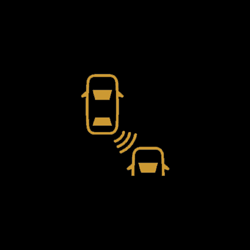
Blind Spot Indicator Light: Indicates that a vehicle or obstacle has been detected in an area that may be difficult to see in the side mirrors.
What should you do? Check your mirrors and blind spots before changing lanes. Do not rely solely on the indicator, especially in poor weather or when sensors may be obstructed.
44. Pre Sense Warning Light
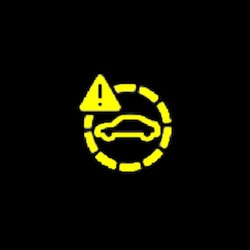
Pre Sense Warning Light: Relates to a pre-collision safety system that can prepare the vehicle and occupants for a possible impact. Depending on the system, it can use braking, seat-belt tightening, hazard lights, and other protective functions.
What should you do? Remain fully attentive and maintain a safe following distance. If the system reports a malfunction or is unavailable, have the relevant sensors and safety system inspected.
45. Hill Descent Control Warning Light
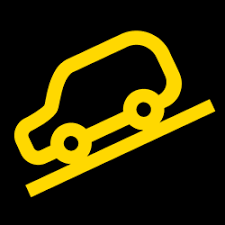
Hill Descent Control Warning Light: Indicates the status of Hill Descent Control. A steady indicator can mean the system is armed or controlling speed, while a flashing indicator can have a different status depending on the vehicle.
What should you do? Use Hill Descent Control according to the owner’s manual and select an appropriate speed. Do not rely on the system beyond its designed operating conditions.
46. Turn Signal Indicator Light

Turn Signal Indicator Light: Indicates that the left or right turn signal is active.
What should you do? If the indicator flashes much faster than normal, check the exterior turn-signal lamps because a failed bulb or circuit can cause this behavior on some vehicles.
47. Service Stop Start System Warning Light
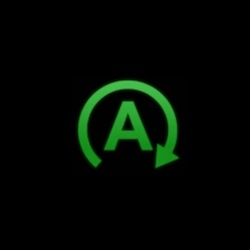
Service Stop Start System Warning Light: Indicates a possible problem with the engine stop-start system. The system may also be temporarily unavailable because of battery condition, temperature, climate-control demand, or other operating conditions.
What should you do? If the vehicle otherwise operates normally, the system may simply be unavailable under current conditions. If a fault message remains, have the system checked.
48. Cruise Control Indicator Light
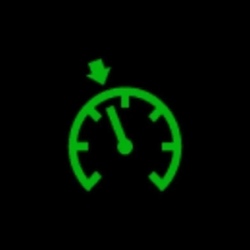
Cruise Control Indicator Light: Indicates that the cruise-control system is active or ready, depending on the symbol state and vehicle.
What should you do? Remain responsible for steering, speed, and traffic conditions. Cancel cruise control when road conditions require continuous manual speed control.
49. Headlight On Indicator Light

Headlight On Indicator Light: Indicates that the vehicle’s exterior headlights or related lighting system is switched on.
What should you do? No repair is normally required when the indicator simply confirms that the lights are on. Check the exterior lamps if one of them is not working.
50. Dipped Head Lights
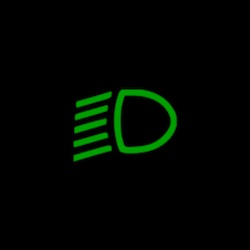
Dipped Head Lights: Indicates that the dipped or low-beam headlights are switched on.
What should you do? This is normally an information indicator rather than a fault. Use the appropriate headlight setting for road and weather conditions.
51. High Beam Indicator Light Warning Light
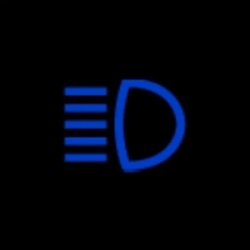
High Beam Indicator Light Warning Light: Indicates that the high-beam headlights are switched on.
What should you do? Switch to low beams when approaching other road users or whenever high beams could cause glare. Follow local traffic laws for high-beam use.
52. Fuel Filter Warning Light

Fuel Filter Warning Light: Indicates that the fuel filter may be dirty, restricted, or due for service. The exact meaning varies by vehicle and fuel system.
What should you do? Check the owner’s manual for the correct service interval and procedure. If the engine loses power or runs poorly, have the fuel system inspected.
Frequently Asked Questions About Dashboard Warning Lights
What do the warning lights on my dashboard mean?
Dashboard warning lights communicate information about your vehicle’s systems. They can indicate normal operation, a maintenance requirement, or a fault. The exact meaning depends on the symbol, color, flashing behavior, vehicle make, model, and model year.
What is the most serious dashboard warning light?
There is no single most serious warning light for every vehicle. Red oil-pressure, engine-temperature, brake-system, and certain steering or electrical warnings can indicate conditions where continued driving may cause damage or create a safety risk.
What does a red dashboard light mean?
A red dashboard light generally indicates a high-priority warning or condition. Read the accompanying message and take appropriate action. For critical systems such as brakes, oil pressure, engine temperature, or steering, stopping safely may be necessary.
What does a yellow dashboard light mean?
A yellow or amber light commonly indicates that a system needs attention, inspection, or service. Some yellow warnings allow continued driving, while others can become serious if ignored.
Why is my dashboard warning light flashing?
A flashing warning can indicate a more urgent condition than a steady light. The meaning depends on the specific system. A flashing Check Engine Light, for example, can indicate a serious engine misfire.
Do dashboard warning lights mean the same thing on every car?
No. Manufacturers can use different symbols, colors, names, and warning strategies. Always check the owner’s manual for your specific vehicle.
Can a dashboard warning light turn off by itself?
Some warning lights can disappear when the condition that triggered them is no longer detected. However, a light turning off does not always mean that the underlying problem has been permanently fixed. A stored diagnostic code may still remain.
Should I reset a dashboard warning light?
Do not reset a warning light simply to make it disappear without identifying the cause. The correct approach is to diagnose and repair the underlying condition first. Some maintenance indicators can be reset after the required service has been completed.
Important Note About Dashboard Warning Lights
The color, shape, flashing behavior, and exact meaning of a dashboard symbol can vary by vehicle manufacturer, model, and model year. A symbol that is an information indicator on one vehicle may represent a fault on another.
If a warning light is red, flashing, accompanied by overheating, loss of braking or steering assistance, smoke, unusual noises, or a serious change in vehicle performance, stop in a safe location and seek professional assistance.